

Internet of Things IoT Future
Connecting Smart Devices to Shape Tomorrow
The Internet of Things (IoT) is a network of physical devices that can sense, process, and share data over the internet without constant human input.
These smart devices turn homes, factories, cities, and vehicles into connected environments that can monitor themselves and react in real time.
What Is the Internet of Things?
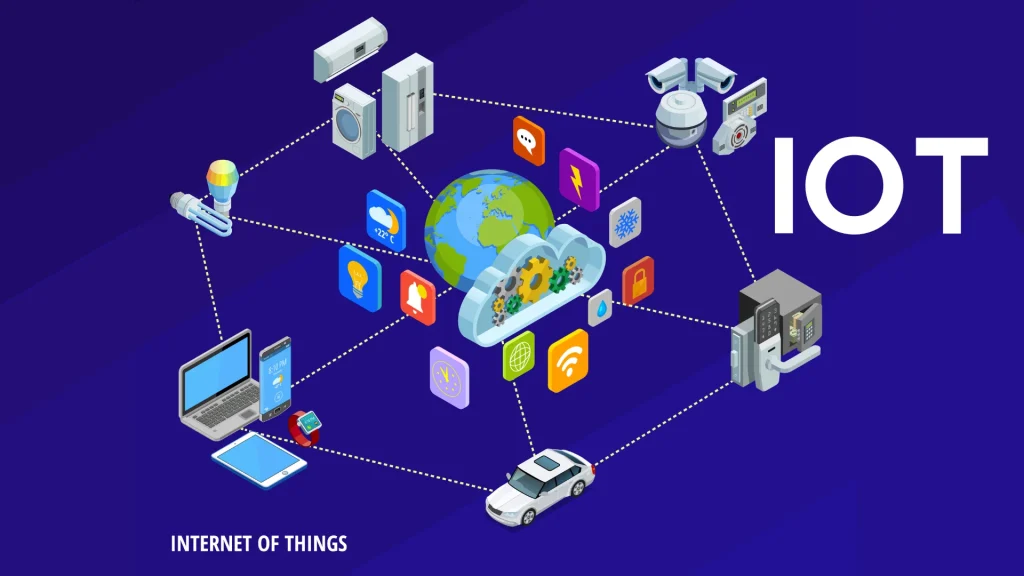
IoT connects sensors, actuators, machines, and everyday objects to digital systems and cloud platforms.
Each device can collect data (such as temperature, location, motion, or usage) and send it to applications that analyze and act on this information.
Typical IoT systems include devices, connectivity (Wi‑Fi, cellular, LPWAN, 5G), cloud or edge computing, and analytics dashboards.
Together, they enable automation, remote control, and smarter decisions based on real‑time data.
Current Applications of IoT
1. Smart Homes and Buildings
In smart homes, IoT controls lighting, heating, security cameras, and appliances.
Users can manage everything from a mobile app, automate routines, and save energy.
Smart buildings use sensors to optimize air conditioning, lighting, and space usage.
This improves comfort for occupants and reduces operational costs.
2. Industry, Logistics, and Healthcare
Industrial IoT (IIoT) connects machines, robots, and sensors in factories to monitor performance and predict failures.
This reduces downtime, improves safety, and supports more efficient production.
In logistics and transportation, IoT tracks vehicles, shipments, and conditions like temperature or shock.
Healthcare uses connected devices for remote monitoring, smart wearables, and better tracking of patient data.
3. Smart Cities and Infrastructure
Smart city projects use IoT for traffic management, smart parking, waste management, street lighting, and environmental monitoring.
Sensors and connected systems help city authorities respond faster and plan better.
This can reduce congestion, save energy, and improve quality of life for citizens.
Examples include smart meters for water and electricity, and connected public transport systems.
Key Technologies Behind IoT
IoT depends on low‑cost sensors, embedded processors, and wireless communication technologies
5G and new communication methods enable more devices to connect with lower delay and higher reliability
Cloud computing offers scalable storage and processing for huge volumes of IoT data.
Edge computing processes data near the devices, reducing latency and bandwidth usage for time‑critical tasks
Security, Privacy, and Challenges
Large numbers of connected devices create new security and privacy risks.
Weakly protected devices can be attacked or misused, and sensitive data needs strong protection.
Main challenges include secure device management, encryption, authentication, and software updates.
Standards, regulations, and best practices are evolving to make IoT ecosystems safer and more trustworthy.
The Future of IoT
The future of IoT will be driven by tighter integration with AI, 5G, and blockchain.
AI helps devices learn patterns, detect anomalies, and make local decisions without human input.
IoT will continue to expand in areas such as autonomous mobility, precision agriculture, smart energy grids, and personalized healthcare.
As billions of devices come online, IoT will be a central part of how businesses, governments, and people interact with the physical world.
Table: Internet of Things – Key Areas and Future Direction
| Area | Role and main idea |
|---|---|
| Core Concept | Connect physical devices to collect and share data over the internet. |
| Smart Homes & Buildings | Automate comfort, security, and energy use. |
| Industry & Logistics | Monitor machines and assets for efficiency and reliability. |
| Smart Cities | Manage traffic, utilities, and public services intelligently. |
| Connectivity (5G, LPWAN) | Enable massive, low‑power, low‑latency device communication |
| Cloud & Edge Computing | Store and process IoT data centrally and near devices |
| Security & Privacy | Protect devices, data, and users from attacks and misuse. |
| AI Integration | Add intelligence for prediction, automation, and optimization. |
| Future Impact | Transform industries, cities, and daily life with connected smart systems. |