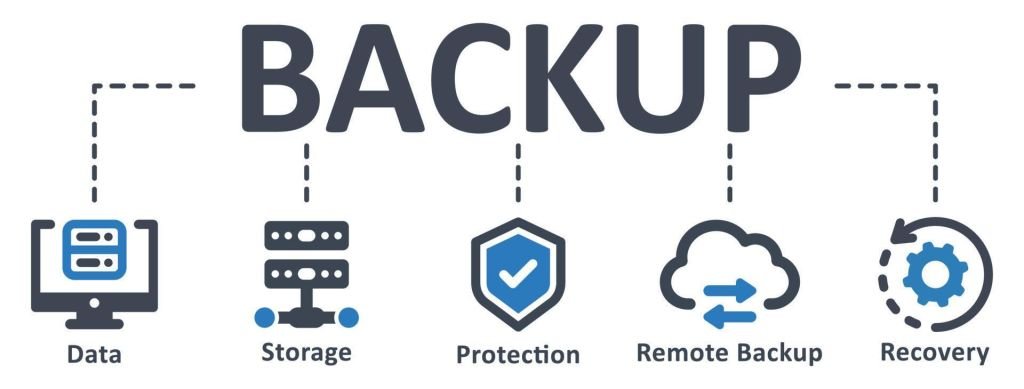
Backups and Continuity
Protecting Your Business from Data Loss and Downtime
Backups and business continuity are essential for any organization that depends on digital systems and data.
A strong strategy in this area ensures that your business can keep working, or return to work quickly, even after serious problems such as cyberattacks, hardware failures, or natural disasters.
What Is Business Continuity?
Business continuity means your critical operations can continue, or be restored within an acceptable time, when something goes wrong.
It covers planning, people, processes, technology, and clear responsibilities so that downtime and data loss are kept to a minimum.
Without business continuity, even a short interruption can lead to financial loss, missed deadlines, and damage to customer trust.
Many organizations use standards and frameworks to structure their continuity work and make it auditable and repeatable.
Backup Types and Strategies
1. Full, Incremental, and Differential Backups
Full backups create a complete copy of all selected data, providing a clean restore point but requiring more time and storage.
Incremental backups capture only the changes since the last backup, making them faster and more storage‑efficient
Differential backups store all changes since the last full backup and are a middle ground between restore speed and size.
Most organizations combine these methods to balance cost, backup windows, and recovery objectives.
2. On‑Premise, Cloud, and Hybrid Approaches
On‑premise backups use local storage such as servers, NAS devices, or tape libraries within the company’s own facilities.
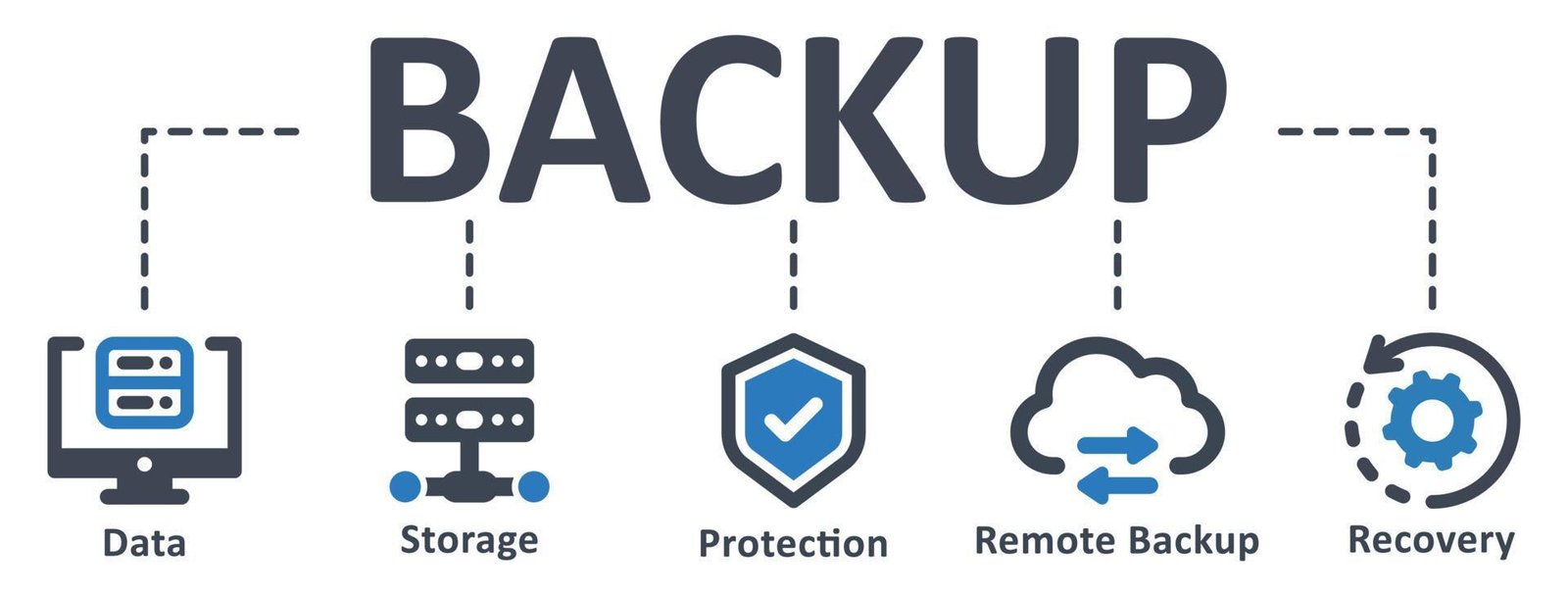
Cloud backups send encrypted copies of data to geographically separate data centers, improving resilience against local incidents
Hybrid backup strategies combine fast local recovery with cloud‑based copies for disaster scenarios, giving both speed and geographic protection.
This layered approach supports flexible recovery options depending on the scale and type of outage.
Disaster Recovery and High Availability
Disaster Recovery (DR) focuses on how to restore IT services and data after a major disruption.
It defines Recovery Time Objective (RTO), the maximum acceptable downtime, and Recovery Point Objective (RPO), the maximum acceptable data loss.
High Availability (HA) uses technologies such as clustering, replication, and failover to keep key services running even when individual components fail.
Together, DR and HA create a robust foundation for continuous operation of critical applications.
Securing Backup Environments
Modern attacks often target backups directly, so backup systems must be treated as high‑value assets.
Good practice includes encryption, strict access control, network segmentation, and monitoring of backup infrastructure
Immutable or offline backup copies, which cannot be changed or deleted, are vital for recovering after ransomware or insider threats.
Regular restore tests confirm that backups are valid and that the team can execute recovery procedures under pressure.
How Deqat Al‑Harf Supports Backups and Continuity
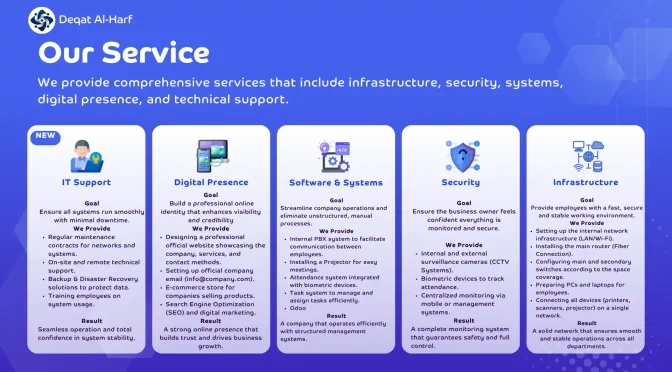
Deqat Al‑Harf Business Technology Solutions designs and implements backup and continuity architectures that match each client’s risk profile and operational needs.
The company combines local and cloud‑based technologies to achieve low RTO and RPO targets, while keeping systems responsive during normal business operations.
By aligning with recognized best‑practice frameworks for continuity and IT service management, Deqat Al‑Harf helps organizations build resilient IT environments from the first day.
This includes clear processes for backup scheduling, recovery testing, and continuous improvement, so that protection evolves with the business.
Table: Key Concepts in Backups and Continuity
| Area | Role and explanation |
|---|---|
| Business Continuity | Keeping critical operations running during and after disruptions. |
| Disaster Recovery (DR) | Restoring systems and data after major incidents. |
| RTO / RPO | RTO = maximum downtime; RPO = maximum acceptable data loss. |
| Backup Types | Full, incremental, and differential copies of data. |
| On‑Premise Backup | Local storage for fast, nearby recovery. |
| Cloud / Hybrid Backup | Off‑site resilience and flexible recovery options. |
| Backup Security | Protecting backup systems from attacks and misuse. |
| Testing and Drills | Regular restore tests and continuity exercises. |
| Deqat Al‑Harf Solutions | Tailored backup and continuity designs for resilient, audit‑ready environments. |